August 15, 2006

The Searchers looking better than good

I’ve been making my way through all those John Ford-John Wayne movies that finally came (see posts below). I’ve also received my copy of Stagecoach – Special Edition (and watched it last night). So my head’s pretty full of Ford imagery and Wayne’s voice.

But let’s start with The Searchers, possibly the best of the lot. In this set, I have Ultimate Edition. Let’s just say there are a lot of features, all pretty good (some much better than good), and of course the film.

I wrote about the previous DVD a few years ago and, while I don’t usually comment on the video qualities (not my strong suit), in that case I did, saying, “For such a great film, it's unforunate the DVD is less than spectacular. While not poor, it falls far short. There are scratches etc. throughout. The sound is also a bit lame, though not unbearably so.”

Well, this new edition corrects all that. It looks and sounds great. I loved it.

Below, I’m putting in my review from a few years ago. I find it interesting because I don’t necessarily agree with all I have to say in it now. Perhaps it has more to do with emphasis. I’d like to watch the movie again and, one day soon I hope, write a new review, if only to collect a few new observations and update some of my previous thoughts.

For now, however, here’s the old one, flaws and all:

The Searchers – earlier review

In the list of great westerns, The Searchers ranks very high. It's one of the great movies, period. But it's a troubling one, too. While cinematically brilliant with its stunning photography of Monument Valley and now famous shots, it's the story of a racist, a man filled with hate.

John Wayne plays Ethan Edwards, an ex-Confederate soldier who returns home several years after the war has ended and who, while no longer fighting, stubbornly asserts that while others may have surrendered, he never did.

Where he has been or what he has been doing for the past few years is never explained. He is left mysterious to us and in a dark way. We see he's a man with a grudge. There's an anger in him that he contains, though just barely. We also see traces of his racism and innate hate in his attitude toward the informally adopted son of his brother's family, Martin played by Jeffrey Hunter. Martin is one-eighth Indian, and this is the reason Ethan treats him poorly.

There is then a Comanche raid on his brother's home. The family is killed except the two daughters, who are taken. Later, one of the daughters is killed and there is only the youngest daughter, Debbie, left alive. She is still with the Indian raiding party. (The older Debbie is played by Natalie Wood; the younger Debbie by her sister Lana Wood.)

Ethan is now consumed with his hate for Indians as he and Martin set off to find Debbie. Martin's reasons for going are twofold: he wants to get Debbie back but also wants to protect her from Ethan, whom he senses is a threat to her.

Ethan is. His plan is to find Debbie and kill her since, in his mind, she is now Comanche. As the film progresses we see the pair on their quest. We see more and more of Ethan's racist hate as their journey goes on.

Director John Ford tries to balance the darkness of this with lighter moments and storylines, such as Martin's relationship with the young woman Laurie (Vera Miles), an unspoken romance that is failing for want of articulation.

However, the lighter elements seem a bit forced. It's Ethan's story that is the heart of the movie.

But what is that story, and what is Ford attempting? An audience of today is likely to be appalled by Ethan's overt hate and racist attitude. Roger Ebert suggests that a contemporary audience (roughly 1956-57) would probably identitfy with his attitudes and this is likely true - perhaps not with the overt hate but certainly with the racist attitude toward native North Americans.

I think a clue to what Ford is attempting lies in the character of Scar (Henry Brandon), the Comanche chief responsible for the raiding party and the taking of Debbie. His character isn't deeply drawn but we do get one scene where he explains himself, at least to an extent. He tells of how his two sons were killed by white people and how, because of that, he is taking revenge.

This is essentially what Ethan is doing. Scar is the native mirror of Ethan, ruled by hate and revenge. Both men are racists and it is their hate than informs it. It is revenge that Ethan seeks but revenge is also the reason for the tragedy that sends him on his hateful quest.

If this is what Ford's movie is about, and I think it is, then what we have in The Searchers is flawed masterpiece. It's a great film that doesn't quite achieve what it attempts.

The failing is in the character of Scar, Chief Cicatrice. The film needs a much deeper exploration of the man. An audience needs to get to know and understand him better. He simply doesn't have enough screen time.

There aren't enough scenes that allow him to be humanized (as there are in a film like Dances With Wolves where we can connect and relate to the native North Americans).

This failing is reflective of the period the film was made. Not only were full characterizations of Indians unheard of, where they do have a presence that goes beyond being extras, the characters are played by white people.

This makes The Searchers something of a conundrum. It is a film about racism and its evils that fails because of an innate social racism that conditioned the making of it. This is not to say the film is racist. I don't think that is either a conscious or unconscious intent. But to some degree we're defined and thus limited by our place in social and cultural history, and so was Ford. The flaws in The Searchers are due these kinds of limitations.

Tags: , , , ,

August 12, 2006

Wayne and Ford arrive – not without incident

I’m currently absorbed by movies made by John Ford and of course they all star John Wayne. Yes, my John Wayne - John Ford Film Collection finally arrived. Not without incident, however (though quickly and easily resolved, thanks to Amazon.ca).

For reasons I do not understand, this set from Warner is one of the few where what you get in the U.S. is not what you get in Canada. The American set has 8 films; the Canadian 7. In Canada, the DVD you do not get is Stagecoach – Two Disc Special Edition.

This is a huge omission. One of the main reasons I ordered the set was Stagecoach (the other was The Searchers).

As mentioned, I don’t know why this is difference between the U.S. and Canada editions exists, but I do understand there are sometimes copyright, distribution, legal etc. differences between the two countries. The problem I had was that initially, and up to the time the actual set began showing up in stores (as far as I can tell), the U.S. information on the set’s details was the same. So someone like me, ordering the set, thought he or she was getting one thing when in fact they were getting something else. And let’s be honest, anyone ordering a fairly big set like this is probably into John Ford-John Wayne films and the absence of Stagecoach is a very big deal.

However ... Thankfully, Amazon can teach other companies a few things about customer service. Granted, it took me a while to find a place to actually send them an e-mail, but once I did and pointed out the problem they immediately acknowledged the problem, apologized for it, and offered me some options. I chose to order Stagecoach separately – at no charge. (Actually, it is charged to my credit card but Amazon processed a refund for it that will appear on my credit card billing.)

You’ll also notice that if you look for John Wayne - John Ford Film Collection on Amazon.ca now, there is no reference to Stagecoach. The information has been corrected to reflect what the Canadian set contains.

It would be nice if Warner acted a bit more like Amazon. I could find no contact link for Warner Home Video in Canada. I finally found a contact thing on the U.S. site, sent them an e-mail, but have heard nothing from them. I love Warner DVDs. They are easily the best for classic film – the movies themselves and the quality of the discs. But like most film companies, certainly the big Hollywood companies, beyond taking customers' money they have absolutely no interest in having anything to do with us. This, more than anything to do with technology, is the biggest threat to the commercial film business.

In the meantime ... If you live in Canada, here’s what you get in the Canadian edition of the John Wayne - John Ford Film Collection:

- The Long Voyage Home (1940)
- They Were Expendable (1945)
- 3 Godfathers (1948)
- Fort Apache (1948)
- She Wore a Yellow Ribbon (1949)
- The Searchers - Ultimate Collector's Edition (1956)
- The Wings of Eagles (1957)


Of these, I’ve so far watched The Searchers, Fort Apache, She Wore a Yellow Ribbon and They Were Expendable. I don’t know if it’s because they were westerns, but I loved the first three – They Were Expendable, not so much.

If I get time, I’ll scribble a few thoughts on these movies. I’ll say this, though ... Having seen the first two of Ford’s cavalry trilogy (Fort Apache and She Wore a Yellow Ribbon), I’ve dug out Rio Grande so I can rewatch that one too (haven’t seen it for a while). I also dug out The Quiet Man, which I haven’t seen for a while either. It’s one of my favourite of all the Ford-Wayne movies – and who in their right mind doesn’t love Maureen O’Hara?

Tags: , , , , , ,

August 7, 2006

The little tramp and the flower girl

I have had Charlie Chaplin's City Lights sitting on my shelf for probably a year or more. Believe it or not, I had never seen it before. So why did it take so long for me to finally get around to watching it?

Because the idiots who put the DVD together have, at the bottom of the cardboard cover, this: B&W/186 Mins.

I suppose I could have checked IMDB to see that the runtime was 87 minutes. And I should have known it was nowhere close to 186 minutes. But that would have required thought - not always my strong suit.

Everytime I'd take a look at this thing, thinking I'd watch it, I kept thinking, "Wow. A three hour silent movie ..." And I'd put it off to another time. (And no, it's not silent - it's just sans dialogue.)

Anyway ... I finally watched it last night (it's actually about an hour and a half long) and it is, as others have asserted many times, brilliant. I absolutely loved it.

I'll tell you what amazes me: this silent (dialogue free) film that, at the time of this watching, is 75 years old, in black and white, had me laughing out loud. I can't think of a single contemporary film, certainly nothing in the last few years, that has prompted me to laugh out loud. Yes, I've enjoyed and been amused by a number - but laugh out loud? Particularly when I'm home, alone, watching it on DVD? Nope.

But City Lights had me laughing.

I loved the opening when the cover is pulled off the statue and there's the tramp, sleeping. I also loved how Chaplin uses sound in the film - though not dialogue. It begins with the opening and the trumpet or kazoo like sounds used to mock the speechifying at the statue's unveiling.

Later, there is the whistle scene ... Utterly silly but it had me laughing. (And scenes like these are so cleverly and finely constructed! The rhythms are perfect.)

And of course, there is the prizefight scene (and the scene in the dressing room leading up to it). This is so magnificantly choreographed. And again ... out loud laughs.

Finally, there is the love story that threads through the film, the tramp and the flower girl, that concludes in the brilliant final recognition scene. There's no pint in me going on about it - it's one of cinema's famous scenes, and others have extolled its virtues better than I will. Let's just say, it's a scene that should not be missed.

It's really quite astonishing how well and completely Chaplin tells his story without words. It's a great reminder of how film is a visual medium. It also demonstrates, as important as the camera is to film, it is performance that tells the story. Granted, the camera has to be positioned and framed well, and editing captures and underscores the rhythm, but without the essential performance (which is dependent on the script) you won't have much of a film - at least, nothing much more than some pretty pictures.

Tags: , , ,

August 6, 2006

Some regard for human frailty

I've been doing a bit of "re-watching" of some all-time favourites, such as The Philadelphia Story, which I ran in the DVD player last night. I've lost track of how many times I've seen this movie.

In re-watching films like this I usually find, as with The Philadelphia Story, that during the first few minutes, as great as they are, I have a sense of, "Gee, I've seen this so many times; do I really want to see it again?" Yet in a very short time I'm into the film's stream and fully engaged as if I'm seeing it for the first time.

Actually, this is something of a problem. Studying, reviewing, critiquing bad movies is relatively easy because you aren't very involved with the film. You can step back and see it objectively - or hopefully you can.

But with a really good film, it's sometimes difficult to identify why it is so good because, at least in part, it engages you so fully you forget you are watching a movie and, being caught up in the film's story, you neglect to note some of the technical aspects of the story-telling, such as structure.

For me, this is certainly the case with The Philadelphia Story. Moments after it starts I'm into the film and, no matter how strong my intent was to view it from a technical perspective, I can't. I'm too busy enjoying it.

I can, however, make a few guesses as to why this movie works so well. There are, of course, the performances. While we all note how good Cary Grant, Katherine Hepburn and Jimmy Stewart are, and how well they work as an ensemble, it goes well beyond that to the greater ensemble. By this I mean the many wonderful supporting performances - one of the keys to many of the great old Hollywood films and a definite key here.

Another reason it works so well is because the various "acts" of the film fit so well together. You often hear of some films, "It was great till the third act, then it just turned into a car chase," or "It was okay but the second act dragged." In the case of The Philadelphia Story, there is a wonderful balance between the acts (perhaps because it began as a play). In fact, it's difficult to say where the transitions are because everything seems to unfold so naturally. The movie feels seamless.

It also seems to me that another reason the film works brilliantly is because it is so well focused on its essential theme which, I think, is articulated first by Cary Grant as C. K. Dexter Haven (and later repeated by Hepburn's Tracy Lord):

"... You'll never be a first-class human being or a first-class woman until you've learned to have regard for human frailty."

This is focused in Tracy, who is contemptuous of her ex-husband (Grant) and her father (John Halliday as Seth Lord).

The film is all about "human frailty" ... it's a kind of celebration of it, and it's reflected everywhere in the movie. (Such as Ruth Hussey as Liz when, questioned by Grant, she refers to Jimmy Stewart's character Macaulay Connor and suggests that, yes, she's in love with him but is willing to wait for him to ... well, grow up is essentially what she means.)

It all reminds me of a line at the end of Mark Helprin's novel Memoir from Antproof Case, which goes:

"Though the world is constructed to serve glory, success, and strength, one love's ones parents and one's children despite their failings and weaknesses - sometimes even more on account of them."

I'm surprised I've managed to write as much as I have about the movie. I had been scratching my noggin to think of what to say other than, "I really, really like it!" But I suppose I've discovered at least three of the reasons why it works so well for me: focus, balance and performance. And of course, it's theme of human failings goes over big with me.

To me, this is a perfect diamond of a film. It's easily one of the best romantic comedies ever made.

(On another note, for what it's worth ... I finally received the e-mail saying my Amazon order has shipped. That means my John Wayne-John Ford Film Collection is finally on the way. It should arrive Tuesday - at least, I hope it does.)

Tags: , , , , ,

July 21, 2006

The Syriana snooze

I'm still waiting for the John Wayne-John Ford Film Collection. In the meantime, I watched Syriana tonight. I wasn't too impressed.

The movie has received a number of very good reviews. One of them, on DVD Town, prompted me to comment and I offer that comment below:
This is one of those movies I feel garners praise less for its merits as a film than for its subject matter. It's certainy a story that should be told but geez ... it's really boring. Especially, as you mention, that first hour.

But you also articulate why this is a dull movie: "To some viewers, "Syriana" may seem to have too many characters, none of whom we get to know very well. But I don't think the characters are supposed to matter much in the film."

That's exactly why it's dull. The main character in the film is oil. What kind of emotional connection do you make with that?

I don't have problems with ensemble pieces - some of my favourite movies are of this type. But the absence of a character focus really makes watching this film feel like sitting through a dull lecture.

As admirable as the intentions were, the execution left a great deal to be desired, for me.

Tags: , ,

July 15, 2006

Waiting on John Wayne and John Ford

Except for a couple of films from th 1980's (Terms of Endearment and Trading Places), I haven't been watching older films recently. I certainly haven't been watching movies from the 30s, 40s and 50s, even though I love old movies.

The reason is simple. Even though I have some pretty good ones lined up to be watched (and rewatched, like In a Lonely Place, which I want to see again), I can't do it because I'm anxious. I am anticipating. I'm waiting for my shipment of the John Wayne-John Ford Film Collection.

I think the set has something like ten discs, including the movies I'm especially keen on: The Searchers Ultimate Edition (two disc set) and Stagecoach Two-Disc Special Edition.

Also included in this collection:

- The Long Voyage Home
- Fort Apache
- She Wore a Yellow Ribbon
- They Were Expendable
- The Wings of Eagles
- 3 Godfathers
- A Turning of the Earth: John Ford, John Wayne and the Searchers
(documentary on the making of The Searchers)

So. You can see why I'm distracted and anxious. I really want this. And it hasn't even shipped yet!

Oh well. Soon, soon.

July 5, 2006

Yes, I liked The Matador

First, in a world where most movie comedies lack the essential element (humour!), The Matador is a wonderful movie. Dry and stupid, slapstick and witty. Compare to Failure to Launch or The Break-Up and weep. Note to directors: after script, casting is everything.

That I could watch and enjoy a film under these intemperate conditions (33C degrees!!!) speaks volumes.

More seriously, few comedy/romantic comedies these days are able to finesse the balance between humour and serious elements (meaning independent movies are drearily earnest while Hollywood comedies assume audience stupidity and penile fixations).

Why are there so few movies like The Matador?

June 26, 2006

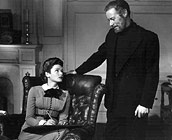
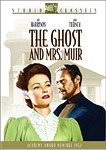
Melancholy romance: The Ghost and Mrs. Muir

I haven't posted anything about an older film for a bit, so I thought I'd post my take on The Ghost and Mrs. Muir (1947). (This was written a year or two ago when the DVD came out.) ...

If you’re looking to be frightened by a ghost movie, this is not the movie for you. While to some extent it is dressed up in the look of one, it’s a romance, and a melancholy one at that.

The Ghost and Mrs. Muir is a beautiful example of black and white filmmaking. There are some great shots and it's interesting to see how the movie uses camera technique and other tools to create mood etc. as opposed to using special effects. (For example, Harrison as the ghost appears out of shadows rather than "materializing.")

The movie is about a recent widow (Gene Tierney) who leaves the oppressive environment of her mother-in-law and sister’s home to take her daughter and live by the sea. She rents a home on the coast, one the real estate man urges her not to take. He reluctantly confesses it is haunted and, because of this, a problem house.

But Tierney’s Lucy Muir falls in love with Gull Cottage and takes it. After a few introductory “haunting” type scenes (less scarey than moody), she meets the ghost, a sea captain played by Rex Harrison. The relationship begins, and so does the real story.

While never explicitly stated (until the end), as an audience we know a romantic relationship is developing – each is falling in love with the other. I think this is because they recognize they share the same independent, uncompromising spirit. One is more overt (the ghost) and the other more restrained (Lucy), but both are informed by individuality.

Of course, the relationship is doomed since she is a living woman and he is a ghost.

Eventually the captain leaves Mrs. Muir because of this. He wants her to live as a flesh and blood woman and to find love with a living man, though he warns, “… there may be breakers ahead.”

There are and Lucy hits them.

The movie shows us an unusually independent woman. She asserts herself again and again though always with a contradictory sense of apology.

Tierney plays Lucy in a playful way (as the DVD notes say, almost screwball). This quality she gives the character allows the film to show us the passage and transformations of time. The playfulness gives her a youthful quality in the first half of the film. As the movie progresses, and time passes, this becomes less and less, replaced by an introverted quietness. This interpretation, along with the wonderful score by Bernard Hermann, creates the melancholy feeling the movie’s opening scenes announced.

As time passes and the ghost of the sea captain is no longer in her life, Gene Tierney’s character becomes a lonely woman, almost eccentric.

The film gives us the inevitable Hollywood happy ending but it’s not enough to take away the essential sadness at the heart of the film. Tierney’s Lucy is a wonderful woman but out of step with her environment.

The only person she truly connects with, and who appreciates her independent spirit, is a ghost. The price for her independence is loneliness.

Tierney plays her part perfectly. Harrison, on the other hand, is a little over the top.

The Ghost and Mrs. Muir is a marvellous film. While it contains a lot of humour, it's primarily a romance, a sweetly melancholic one.

June 19, 2006

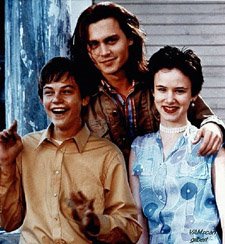
I love Gilbert Grape

I’ve only a moment but I wanted to say, for what it is worth, I love What’s Eating Gilbert Grape. I just watched it again, this time in the new DVD “Special Collector’s Edition” which includes commentary by director Lasse Hallström and writer Peter Hedges (along with some special features).

I think, for me, Hallström may be one of those “under the radar” directors. There seem to be a number of his films I love, not just Gilbert Grape; movies like An Unfinished Life and My Life as a Dog. Not being a director of blow-everything-up movies but of quieter, gentler films (for the most part), his work in the big arena seems to go unnoticed (though he has done pretty well, despite that).

Whatever … I seem to watch Lasse Hallström’s films over and over because I enjoy them so much. In the case of What’s Eating Gilbert Grape I’d also point out that there is some splendid photography thanks to cinematographer Sven Nykvist.

If you haven’t seen it, or if you have but haven’t seen it for a while, do yourself a favour and watch it.

And for those of you into the star thing: Johnny Depp! Leonardo DiCaprio! What more could you ask for?

June 16, 2006

Matrix meets Shopgirl - one loses

I tried watching The Matrix Reloaded tonight. After 30 minutes I was so bored I gave it the heave-ho. I put Shopgirl into the DVD player.

I was no longer bored. While I would call it a "flawed film," Shopgirl is pretty good as far as being what it is trying to be, and being engaging. And as opposed to the The Matrix Reloaded, there was a legitimate story and actual characters - always a plus.

I realise they are very different movies, aiming at different audiences and with different goals in mind. But one comes close to being what it aspires to be and the other ... well, it's a lot of noise, cool pictures and green tinted images.

Anyway ... that was my movie experience tonight.

(I should probably add, I've seen both films previously. I didn't care for The Matrix Reloaded the first time. That's why I tried it again. I thought I'd give it a second chance. I've seen Shopgirl previously, and only sort of liked it. I liked it more this second time - usually a sign that a film that has somthing going for it (like a modicum of substance.)

June 4, 2006

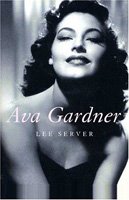
The combustible Ava Gardner

I recently finished reading Ava Gardner: ‘Love is Nothing’ by Lee Server and it’s nothing if not entertaining. Somewhere, he makes mention of her living life “like a rocket.”

It’s an apt description but I think I’d say she lived like she drove cars – fast, carefree and just a little bit out of control (and with more than a few crashes).

It really is an extraordinary life and, if the end has a bit of sadness to it, it should be seen in context. Her highs were very high and the lows – well, very low. It strikes me as a life characterized by extremes.

I found the biography very good and, as one reviewer mentioned (I can’t remember who it was), while Server details the good and the bad he does appear to have an affection for his subject. But then, really, who didn’t? One thing the biography makes fairly clear is how easily most people found Ava to like, even to love.

And yes, the book covers all the marriages and the affairs and, good grief, there were a helluva a lot of them.

As for her film work, one thing that comes across (for me, at least) is how much we missed of some fine acting – for several reasons. In part, a studio that seemed incapable or indifferent to placing her in good roles, and also Ava’s own insecurities and capriciousness. She was better than she knew, better than the studio allowed her to be and so she probably never achieved what she might have on film.

We do, however, have Ava Gardner in some gems, like The Killers and (my favourite) The Night of the Iguana. (Server often mentions the film Pandora and the Flying Dutchman and, while Gardner is quite fine in the film, as is James Mason, the movie as a movie is a bit of a turkey.)

If I have any objection to the biography I think it is that an explanation for the kind of personality Ava Gardner had may be absent, though I’m not sure anyone could actually explain what went into making Ava Gardner. This is not to say the book omits anything or is remiss in anyway. But she seems to have experienced major swings in mood (many, I would imagine, caused by alcohol – she was, I think, an alcoholic, taking it in like water). She was also plagued by insecurities.

And really, what explains that relationship with Sinatra? Alcohol and combustible personalities … It’s an explanation but I’m not sure that fully accounts for it.

Whatever the reasons, Ava Gardner’s life is utterly fascinating. And perhaps more than just the endless incidents and relationships, it may be its inexplicable quality that makes it most compelling.

Also see:
Ava Gardner, last studio-made star, subject of new biography

Tags: ,

May 29, 2006

What a difference - Kingdom of Heaven

The theatrical version of Ridley Scott's Kingdom of Heaven was an okay action film. This was the version initially released on DVD. Now they've released the 4-dics version - the Director's Cut, what Scott calls his favourite version.

It's like a completely different movie and it rocks! Maybe the best thing he's done. I can't get over how much better it is than the theatrical version - they've added 50 minutes (from 144 minutes to 194) but the edit has also changed, to some degree. And what they've added isn't extended battle scenes but character development and plot (especially in the beginning). Wow.

Anyway ... I'm not much of a Ridley Scott fan but I absolutely loved this. And while it's longer, somehow it doesn't seem a long film.

For me, the difference between the two versions is amazing. Usually these director cuts are a waste of time. This time, it's a better movie. A much better movie.

May 20, 2006

What kind of movie is The Big Heat?

I watched The Big Heat (1953 – Fritz Lang) again this week. I love this movie. Lee Marvin and Gloria Grahame are fabulous. (In both cases, the performances are up there with their best – and in Grahame’s case, I think it is the best, at least of what I’ve seen).

And Glenn Ford plays the central "hero" character bang on. Although this lead character, Bannion, makes this film noir not really a noir. Although it feels like one and has that look.

But he’s not really flawed in a self-destructive way like noir heroes (or anti-heroes) normally are. No, he’s really a good guy with a hate on. This is really more a template for those films Clint Eastwood became successful with (like Dirty Harry or his westerns). It’s a revenge story.

But however it’s described or categorized, The Big Heat is one of my favourite movies. (And I’ve always loved Gloria Grahame’s look – must be her mouth and that pout. Or is it the eyes? I’m not sure …)

By the way ... The DVD (Columbia Pictures, or Sony if you prefer), released in late December 2001 I believe, is adequate although there is a great deal of wear, such as flecking, at the beginning and end of the film. In other words, it could stand a bit of restoration work.)

Tag: , , , , ,

May 14, 2006

Why I like Tom Cruise

It boils down to this: he’s been in a lot of movies that I love. I pay as little attention as possible to his public appearance hoo-hah, his marriage to Katie whoever, the baby, Scientology … blah blah blah. Though, obviously (since I’ve mentioned them) I can’t escape that crap.

But for the most part I don’t pay attention. I roll my eyes and change the channel or whatever.

Everything about the Tom Cruise public image makes him someone that makes me want to tear my hair out. And I wish to heaven he’d stop making the work-out movies like those endless Mission Impossible films. (As an aside, when any film is associated with the term “franchise” I head for the hills. It means it’s a hamburger.)

But … Cruise has been in great movies and, part of why they have been great is – hang on to your drawers – Tom Cruise. That’s the puzzler about him. He’s remarkably good. So why is he connected with all the other nonsense?

Well, people are odd. All of them. Including, and perhaps moreso than others, Tom Cruise.

But look at what he’s been involved with (when not flying planes or jumping on Oprah’s couch):

- Collateral
- The Last Samurai
- Minority Report
- Jerry Maguire
- A Few Good Men
- Rain Man


Those films make it difficult for me to dismiss Mr. Cruise. In fact, I prefer to dismiss the other nonsense and see him in terms of those films. He’s really very good at what he does. Perhaps too much so – maybe when you are that good it gets too easy to be self-indulgent and follow whatever random notion captures your imagination.

Whatever the true view of Tom Cruise is there’s no denying he’s good at what he does when he commits to it. So my hope is the current nonsense passes soon and, as I suspect is the case, he gets back quickly to simply bringing great performances to films of good stories.

Tom Cruise, the actor (as opposed to the celebrity) is extraordinarily good at his job. The celebrity is simply annoying. The actor, on the other hand, is about as good as it gets.

May 13, 2006

Mrs. Stone’s grim spring

Much as I like Vivien Leigh, and the work of Tennessee Williams, I can’t say I was terribly taken by The Roman Spring of Mrs. Stone (1961 - directed by José Quintero). I’m pretty sure this was the first time I had seen it and I’m also pretty sure I’ve never read the short novel it was based on (by Williams).

I think I like the idea of the movie less than the actual film itself. I wish there were more films about people in their latter years. But this one was just too … I dunno. Bland, I guess (though that seems an odd descriptive for something based on a work by Tennessee Williams).

Part of the problem is there is a bit of an anachronistic feel to the film. It looks and feels very sixties – but maybe that’s just the hairstyles and clothes. More seriously, it is just too somber. Not that that is inappropriate, but it is unrelieved. So there is no sense of balance.

Oddly, there was drama going on around the filming, at least with Vivien Leigh and her break up with Lawrence Olivier, and that probably informed her performance, which is quite good.

And Lotte Lenya is extremely good as an evil procuress. As for Warren Beatty, I was fine with his performance (though others are not so kind) but still would have preferred an actual Italian in the role.

Yes, I think my biggest problem is the seriousness of tone that never lets up. Somewhere in all this there should have been some “oomph,” whatever that might be. On the whole, I found Mrs. Stone’s spring slow-moving and grim.

Much more like fall.

May 4, 2006

Tonight I watched The Night of the Iguana

Today was a happy day as my order arrived – the DVD set Tennessee Williams Film Collection. So that’s six movies plus a disc with a documentary (Tennessee Williams’ South).

While I’ve always liked Williams, and thus have a fondness for films based on his plays (and one novel), I really bought this set for one movie, the one I watched tonight: The Night of the Iguana (1964), directed by John Huston (and starring Richard Burton, Ava Gardner and Deborah Kerr).

While I don’t think it’s a great movie I certainly think it’s very good. And I suppose it’s also what the movie is about, and how it is about it, that appeals to my own tastes in film and art generally.

It’s about frail people at the edge of endurance. The how, that appeals to me, is that it is through character and dialogue (Williams is, after all, a playwright) and it’s done with great empathy – kindness, I suppose, though it also has its harshness.

Williams work, at least as done cinematically, does have a certain histrionic quality seen at this distance (2006, whereas most of the films were made in the fifties and early sixties) but that doesn’t really bother me. I find it pretty easy to settle into the tone of the films. But that may not be so for everyone.

In The Night of the Iguana, by the way, as much as I like Richard Burton, and particularly like Deborah Kerr (her character has some of the best speeches), it is Ava Gardner who really stands out for me. Her performance is wonderful.

And now I have five more films to look forward to. The only problem is deciding which one is next. The set, by the way, includes these films:

- A Streetcar Named Desire (1951) Two-Disc Special Edition
- Baby Doll (1956)
- Cat on a Hot Tin Roof (1958) Deluxe Edition
- The Roman Spring of Mrs. Stone (1961)
- Sweet Bird of Youth (1962)
- The Night of the Iguana (1964)

Tag: , , , , ,

May 2, 2006

Reading about Clark Gable, movie star

I'm currently reading Clark Gable: a Biography by Warren G. Harris. While not great, it's certainly pretty good. I'm almost finished it and I have to be honest, what I find most interesting is how uninteresting Clark Gable is.

Perhaps a more rigorous biography might have helped this - a bit more psychological focus, assuming there is sufficient information available to do that.

The book itself is interesting enough, but it just seems a bit odd that someone of that "star" stature should be so ... well, bland. But perhaps that's the real story of Gable - a huge success in that Hollywood world, yet really just an average guy.

Of course, I should also say that while I've never disliked Clark Gable movies, and there are few I like quite a lot (Gone With the Wind and Run Silent Run Deep, for instance) I've never been a huge fan of his.

Tag: , ,

April 27, 2006

Shopgirl – and a couple of other films

Yes, the Carole Lombard movies are behind me. I’ve been watching other movies and a number of them are relatively recent films. Three of the best I’ve seen recently are:
- Shopgirl
- An Unfinished Life
- Mrs. Henderson Presents
In fact, I watched Shopgirl tonight and loved it. All three of these films are good and not one is a Hollywood action-thriller-special effects extravaganza. What they all have in common is a good story and interesting characters.

At the same time, they have enough Hollywood sensibility not to be drearily realistic films – not that films such as that are terribly realistic, they just think they are because they begin and end in tragedy.

That is definitely not these films.

Tags: , ,

April 24, 2006

Six Carole Lombard movies - a wrap

Hopefully this will be the last of my Carole Lombard postings for a while. Much as I like Carole Lombard, it's time to move on. But I did what I had wanted to do - scribble some comments on each of the six films that made up Carole Lombard - the Glamour Collection. If you want to have a look, here's what I thought about each one:

- Man of the World (1931)
- We're Not Dressing (1934)
- Hands Across the Table (1935)
- Love Before Breakfast (1936)
- The Princess Comes Across (1936)
- True Confession (1937)

Interestingly, there was only one that I didn't particularly like.

Carole Lombard - the Glamour Collection:
- Amazon.com (U.S.)
- Amazon.ca (Canada)

Tag: , , , ,

April 23, 2006

True Confession – truly wonderful

Of the six movies on the set Carole Lombard: The Glamour Collection the last is True Confession (1937) and I think this may be the best. I loved this one.

Once again it teams Carole Lombard with Fred MacMurray – and they make a great combination. This time, however, MacMurray gets to play something a little bit different. No longer the cocksure young man with a secret or two and a bit cagey, here he plays the gullible innocent.

While this film is kind of romantic-comedy, it probably more properly belongs in the screwball category. Here, Lombard is the ditzy star and she’s absolutely wonderful.

The basic premise of the film is a husband and wife (MacMurray and Lombard). He’s innocent and bullheadedly honest and she’s a compulsive liar. In fact, Lombard does a little thing of putting her tongue in her cheek each time she embarks on another lie.

He’s a struggling lawyer. He won’t take cases unless his clients are innocent. The family bank account is suffering because of his high standards, and because he refuses to allow his wife (Lombard) to work. Meanwhile she is at home, desperate for her husband to get some cases and passing her time typing out stories – an outlet for her imagination (and lies).

She has also managed to land herself a job – pretty high pay for little work as a secretary. As it turns out, her potential employer has some less than respectable notions of secretarial work. Lombard also must keep the job hidden from her husband.

As it turns out, she must flee her potential employer in order to maintain her wifely virtue … and the potential employer ends up dead. Murdered. Lombard is the prime suspect.

Although she didn’t do it, her husband (MacMurray) is to defend her, believes she did but thinks he has a defense for her, so she admits to the crime.

And so on. Lombard’s troubles compound with her insistence on telling ever more elaborate lies, and with her husband’s insistence on truth and honesty (and his irritating innocence).

And then into the mix comes a cynical and cultured, but down on his luck, legal aficionado, John Barrymore.

The pacing is fast and the situations ludicrous and hilarious. While the business of the tongue in the cheek may be a little over done, Lombard is as funny as she ever was. This is Lombard at her absolute peak as a comic-romantic actress. This is Lombard as the queen of screwball. With the possible exception of My Man Godfrey, I don’t think I’ve ever seen her better.

Personally, I watch Carole Lombard movies to see this Carole Lombard. (Fred MacMurray is pretty darn good too – as are the supporting performers in this film, especially Una Merkel as Lombard’s best friend.)

This movie’s a gem. Recommended.

True Confession:
- Amazon.com (U.S.)
- Amazon.ca (Canada)

Tag: , , , , ,